












Hyundai Motor Group Develops Wearable Vest Exoskeleton to Alleviate Burden in Overhead Work
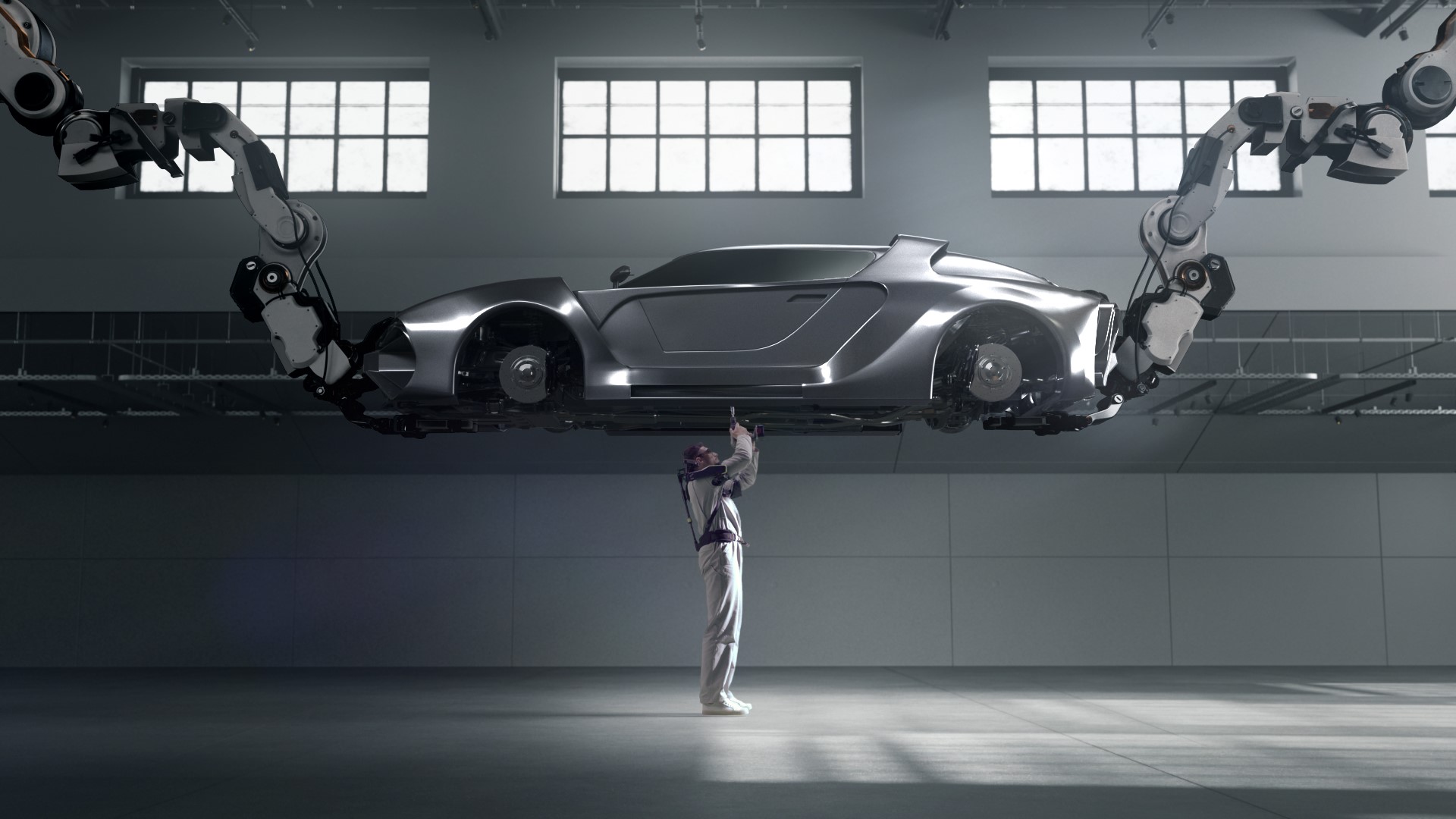
- New Wearable Vest EXoskeleton (VEX) is up to 42% lighter than competing products
- The VEX functions without the need for a battery by imitating human shoulder joint and using multilink lift assistant module
- Hyundai Motor Group also announces commercialization of its Chairless EXoskeleton
- Hyundai Motor Group to expand robot application into EV charging and personal mobility
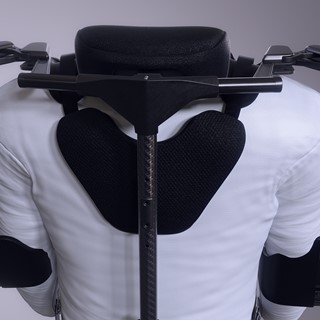
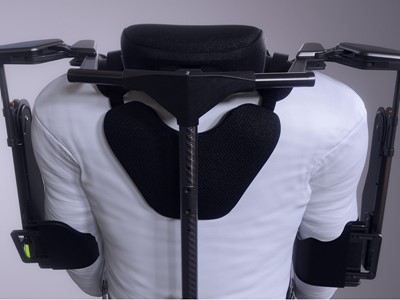
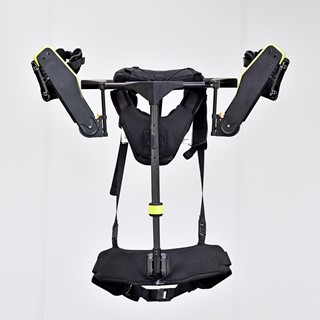
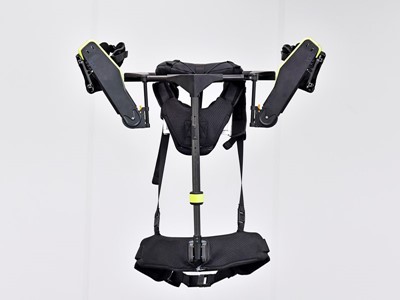
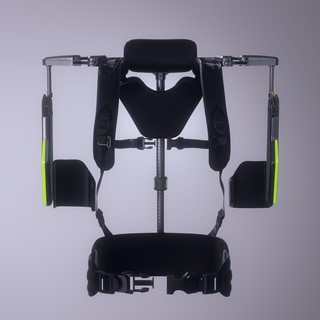
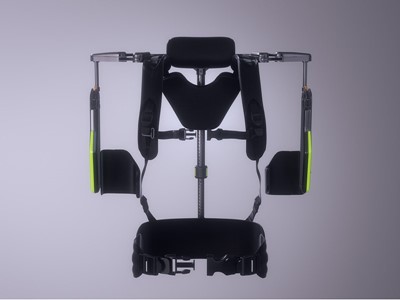
Hyundai Motor Group has developed new Vest EXoskeleton (VEX), a wearable robot created to assist industrial workers who spend long hours working in overhead environments.
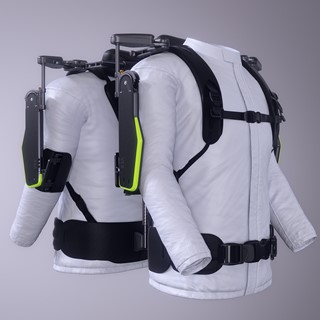
The VEX enhances productivity and reduces fatigue of industrial workers by imitating the movement of human joints to boost load support and mobility. The wearable vest the polycentric axis – combining multiple pivot points with multi-link muscular assistance – to function, eliminating the need for a battery.
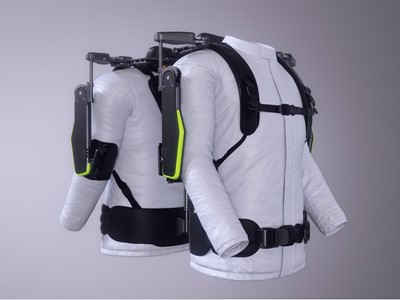
At 2.5kg, VEX weighs 22-42% less than competing products and is worn like a backpack. The user places their arms through the shoulder straps of the vest, then fastens the chest and waist buckles. The back section can adjust in length by up to 18 cm to fit a variety of body sizes, while the degree of force assistance can be adjusted over six levels – up to as much as 5.5 kgf.
“VEX gives workers greater load support, mobility, and adaptability when operating in overhead environments.” stated DongJin Hyun, head of Robotics team of Hyundai Motor Group. “Workers will also appreciate how light VEX is to wear and work with.”
The newly-developed VEX is targeted at production-line workers whose job is primarily overhead, such as those bolting the underside of vehicles, fitting brake tubes, and attaching exhausts. The development of the VEX included a pilot program in two Hyundai Motor Group plants in the US. The trial was widely successful in assisting workers and boosting productivity and both plants incorporated VEX systems in their production lines.
The Group is considering on implementing the VEX on plants around the world. It is expected to go into commercial production in December by Hyundai Rotem and is projected to cost as much as 30% lower than existing products which usually costs around 5,000 dollars.
Hyundai Motor Group commercializes Chairless EXoskeleton
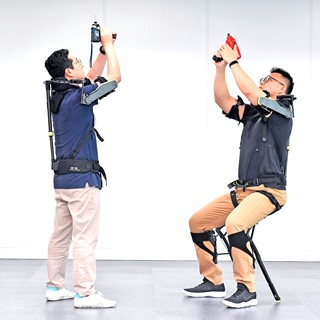
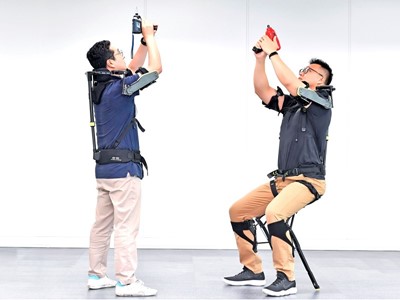
As part of the Group’s plans to develop a diverse range of robotics technologies, another lightweight wearable device is soon to be commercialized. The ‘Chairless EXoskeleton’ (CEX) supports workers to maintain a sitting position without a stool or chair. At 1.6kg, it is light yet highly durable and able to withstand weights of up to 150kg.
The CEX’s waist, thigh, and knee belts can be easily fitted and adjusted to the user’s body size and height. It also features three different angle settings (85 / 70 / 55 degrees). By reducing the user’s back and lower body muscle activity by 40%, it reduces fatigue and improves efficiency.
The development of the VEX and CEX demonstrates Hyundai Motor Group’s steadfast commitment to the health and wellbeing of its industrial workers and its ongoing exploration of advanced robotics.
The Group also plans to showcase diverse robotics technology, including a ‘Hotel Service Robot,’ ‘Sales Service Robot,’ ‘Electric Vehicle Charging Manipulator,’ and other ‘Robotic Personal Mobility’ solutions in the future.
The future for wearable robotics
According to the International Federation of Robotics, the wearable robotics industry is growing 14% annually, a rate which is accelerating. By 2021 approximately 630,000 commercial robots will be sold worldwide, with the greatest demand coming from the automotive sector. In 2017, 126,000 robots were supplied to the auto sector, making-up 33% of all commercial robots.
Recognizing the market trend, Hyundai Motor Group is making active investments and strengthening its presence within the growing robotics industry by securing relevant technologies.
For more detailed information about ‘VEX’, please refer to Hyundai Motor Group’s media website or: https://youtu.be/ybGnbaCdZIk
MEDIA


MORE FROM News
-
Kia Celebrates 25 Years of Partnership and Innovation at Australian Open 2026 with Global Marketing Initiatives
-

Kia E-Ground Wins Good Design® Award for Sustainable Mobility Innovation in Latin America
-


Hyundai Motor Group Appoints Dr. Minwoo Park as Head of Advanced Vehicle Platform Division and CEO of 42dot
-
Kia Unveils EV2 at Brussels Motor Show

